

Short answer: yes, temporarily and clearly. Whether stress causes lasting, chronic high blood pressure is less certain, but stress reliably pushes people toward habits that do.
That distinction matters, and most articles on this topic blur it. Here’s the honest breakdown.
What Happens to Your Blood Pressure During Acute Stress
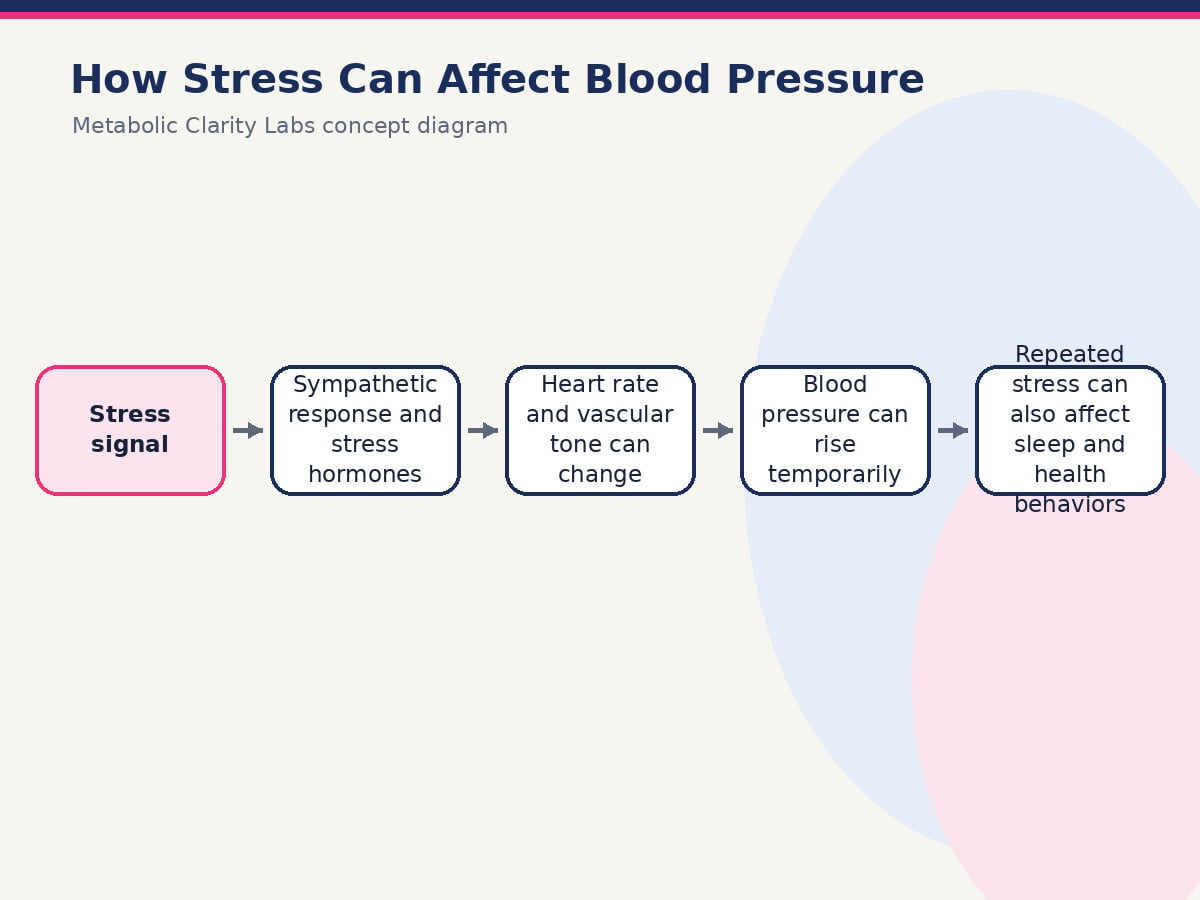
When you’re stressed, in a stuck-in-traffic, tense-work-meeting, argument-with-someone kind of way, your body’s sympathetic nervous system activates what’s commonly called the fight-or-flight response. This triggers a release of hormones, including cortisol and adrenaline, that increase your heart rate and cause blood vessels to constrict. Both of those effects raise your blood pressure in real time. This is well established and not controversial: acute stress produces measurable, temporary blood pressure spikes.
This is also exactly the mechanism behind “white coat hypertension,” where a reading taken during the stress of a doctor’s visit runs higher than your typical pattern at home.
The Part That’s Actually Less Clear: Does Stress Cause Lasting Hypertension?
Here’s where the research gets more careful, and more honest, than a lot of health content lets on. Major medical institutions including the Mayo Clinic and Cleveland Clinic are explicit that researchers don’t have strong evidence that stress itself directly causes sustained, long-term high blood pressure. A cardiologist at Cleveland Clinic put it plainly: stress itself doesn’t necessarily cause sustained blood pressure elevation, but it often affects the lifestyle factors that do.
That’s not the same as saying stress doesn’t matter for your blood pressure long-term. It matters quite a bit, just mostly through an indirect path rather than a single, isolated stress-to-hypertension mechanism.
The Indirect Path: How Chronic Stress Actually Raises Long-Term Risk
Chronic stress tends to push people toward behaviors that independently raise blood pressure:
- Poor sleep. Stress and disrupted sleep feed each other, and poor sleep is separately linked to impaired blood pressure regulation.
- Increased alcohol use. A common coping response to stress, and alcohol has a direct, dose-related effect on blood pressure.
- Reduced physical activity. Stress often crowds out exercise, removing one of the more effective tools for managing blood pressure.
- Changes in eating patterns, including higher intake of processed, high-sodium foods during stressful periods.
- Smoking, or increased smoking, in people who already smoke.
There’s also a more direct physiological pathway worth mentioning: repeated stress-driven activation of the nervous system can increase kidney vasoconstriction and sodium retention over time, which some researchers believe may itself contribute to blood pressure elevation independent of behavior. This remains an active area of research rather than settled fact.
Why This Distinction Actually Matters for You
If you treat “stress causes high blood pressure” as a simple, direct, one-to-one fact, the natural response is to feel like you need to eliminate stress entirely, which is neither realistic nor, based on the evidence, the most useful target. The more accurate and more actionable framing is: managing how you respond to stress, specifically sleep, alcohol, activity, and eating patterns, is what actually protects your long-term blood pressure, more than eliminating the stressor itself ever could.
This is also why the Four Loads framework treats Regulatory Load as connected to, but not identical to, stress. Stress is one input among several that affects how well your body’s regulatory systems maintain healthy blood pressure day to day. Read more in our guide to Regulatory Load.
What Actually Helps, Based on the Evidence
- Slow, controlled breathing. Cedars-Sinai cardiologists specifically recommend slow breathing, aiming for fewer than 10 breaths per minute for around 10 minutes daily, as an evidence-backed way to reduce both stress and blood pressure in the moment.
- Regular physical activity. Multiple sources point to 3-5 sessions of about 30 minutes per week as genuinely effective for stress reduction and blood pressure management together.
- Addressing the coping behaviors directly, not just the stress itself: sleep, alcohol intake, and activity level are all modifiable independent of whether the stressor itself goes away.
- Talking to your doctor about your specific stress response. Since stress is inherently subjective and hard to quantify, a conversation about your specific triggers and how your body responds to them is more useful than a generic stress-management checklist.
The Bottom Line
Stress reliably spikes your blood pressure in the moment. Whether it independently causes lasting hypertension is still being researched, but the behaviors chronic stress tends to produce, poor sleep, more alcohol, less activity, absolutely do. If you’re trying to protect your long-term blood pressure, managing those downstream behaviors is where the clearest evidence points, alongside working with your physician on your specific numbers and risk factors.
Track how your readings actually respond over time with our Blood Pressure Average Calculator, which averages multiple home readings rather than relying on any single stressed-out office visit.
Sources
American Heart Association; Mayo Clinic, “Stress and high blood pressure: What’s the connection?”; Cleveland Clinic, “How Stress Is Linked to High Blood Pressure”; Cedars-Sinai, “Does Stress Cause High Blood Pressure?”; published research on renal mechanisms of stress-related blood pressure changes.
Leave a Reply