

Short answer: Evening readings can be higher because of measurement conditions, daily activities, medicines, or an underlying blood-pressure pattern. A repeated high evening reading should not automatically be dismissed as normal. Record properly taken readings and discuss the pattern with your clinician.
The time of day provides context. The actual numbers, symptoms, and repeated pattern determine what needs attention.
The Normal Daily Pattern, Explained
Blood pressure isn’t a fixed number that only changes when something’s wrong. It follows a predictable daily rhythm called a circadian pattern:
- It’s at its lowest during sleep, when your body is at rest.
- It begins rising a few hours before you wake up, driven by a release of cortisol and activation of your sympathetic nervous system preparing your body for the day (this is sometimes called the “morning surge”).
- It continues climbing through the day as you become more active, and typically peaks sometime around midday to early evening.
- It gradually declines in the late afternoon and evening, then drops again overnight.
A morning-versus-evening comparison does not by itself identify the cause. Mayo Clinic describes a usual rise before waking, a midday peak, and a decline later in the day, while recognizing abnormal patterns. Compare readings taken under similar resting conditions and discuss consistently elevated values.
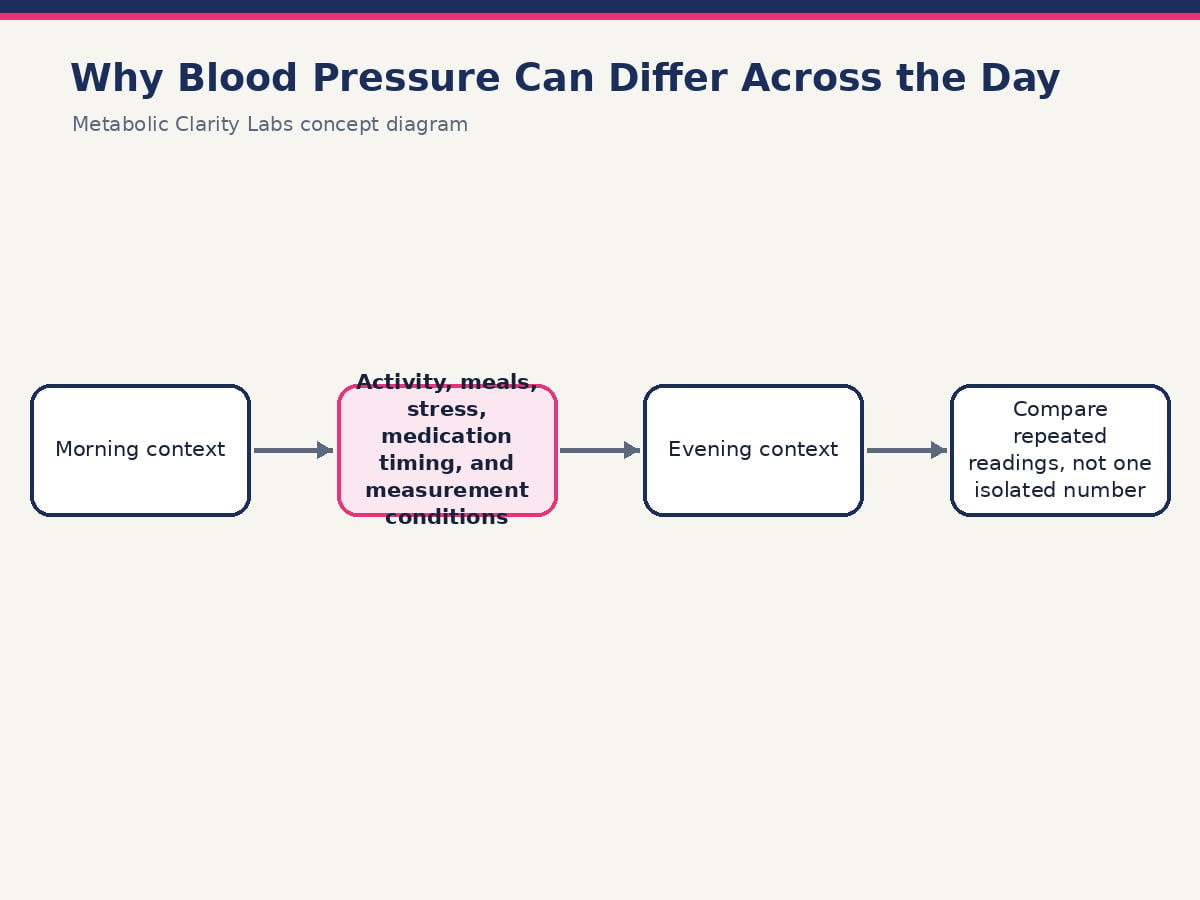
What Specifically Pushes Evening Readings Higher
A few concrete factors that build up over the course of a day and show up more in evening readings than morning ones:
- Sodium intake from meals, especially if lunch or an afternoon snack was higher in sodium than breakfast.
- Accumulated physical activity and movement throughout the day.
- Mental and physical stress from work or daily responsibilities, which activates the same sympathetic pathways involved in the morning surge, just triggered by your day instead of your wake cycle.
- Alcohol, if consumed earlier in the day, can have measurable, lingering effects on evening readings.
- Caffeine, particularly if you’ve had coffee or another source closer to your evening reading than your morning one.
- Simply being upright and active for hours, versus a morning reading taken shortly after getting out of bed.
These factors can affect readings, but do not use them to explain away a persistent elevation. Record their timing and bring the log to your clinician. Medication timing and sleep-related questions may also need assessment.
When It’s Worth Mentioning to Your Doctor
There’s one specific pattern that’s different from ordinary daily variation and is worth flagging: if your blood pressure doesn’t drop appropriately overnight during sleep, sometimes called a “non-dipping” or “riser” pattern, that has been associated with higher cardiovascular risk in research. This isn’t something you’d typically catch from a simple morning-vs-evening comparison; it usually requires overnight or 24-hour monitoring to identify properly. If you’re specifically concerned about this, that’s a conversation for your physician, not something to self-diagnose from home readings alone.
The more useful home-monitoring habit isn’t comparing one morning reading to one evening reading in isolation. It’s tracking your average at each time of day over several days, since a single reading in either direction can be thrown off by something as simple as a stressful phone call or a rushed cup of coffee beforehand.
How to Actually Track This Usefully
Current guidance suggests taking two readings, about one minute apart, in the morning and again in the evening, for at least 3 and preferably 7 days before drawing any conclusions. A single morning-vs-evening comparison on one day tells you very little. A week of averaged patterns tells you a lot more, and it’s exactly what’s worth bringing to your next appointment instead of one number that happened to look concerning.
Our Blood Pressure Average Calculator is built specifically for this: it averages your morning and evening readings separately over several days and compares the pattern against current AHA categories, so you’re looking at a real trend instead of reacting to a single reading.
The Bottom Line
Bring the complete morning and evening record, your monitor, cuff information, and medication schedule to your appointment. Ask whether home readings are sufficient or whether 24-hour monitoring would help. Do not change medication timing yourself. Use the measurement checklist and average calculator to organize the evidence.
Need a simple record to take with you? Use our seven-day blood pressure log guide, including a worked averaging example and appointment checklist.
Sources
Mayo Clinic, “Blood pressure: Does it have a daily pattern?”; Cleveland Clinic Health Center; published research on circadian blood pressure rhythm and cardiovascular risk; American Heart Association home blood pressure monitoring guidance.
Leave a Reply