
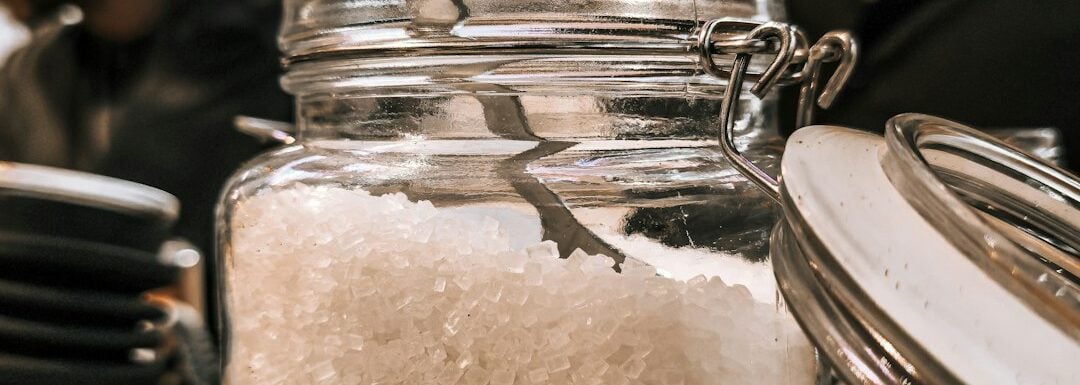
Allulose and erythritol are the two bulk sweeteners behind most “keto” and “zero sugar” products. They look alike in the bag and do the same job, replacing the volume of sugar with very few calories. They are different substances, and they show up differently on a Nutrition Facts label. This guide compares them.
Quick answer: Allulose is a sugar that the body mostly does not use; the FDA lets manufacturers count it at 0.4 calories per gram and leave it out of total and added sugars, though it still counts in total carbohydrate. Erythritol is a sugar alcohol with about 0.2 calories per gram, listed under sugar alcohols. Both are about 60 to 80 percent as sweet as sugar. This is general education, not medical advice.
Side by side
| Allulose | Erythritol | Table sugar, for reference | |
|---|---|---|---|
| What it is | A sugar that is metabolized differently from ordinary sugars | A sugar alcohol | Sucrose |
| Calories per gram | 0.4 | about 0.2 | 4 |
| Sweetness compared with sugar | about 70 percent | about 60 to 80 percent | 100 percent |
| On the label: total carbohydrate | Counted | Counted | Counted |
| On the label: total and added sugars | May be left out | Not a sugar; listed as sugar alcohol | Counted |
Sources: FDA statements on allulose labeling (2019), the FDA consumer update on sweeteners, the American Academy of Family Physicians’ familydoctor.org page on sugar substitutes, and trade reporting on the FDA guidance; read November 11, 2026.
How each appears on a label
This is the practical difference. Under the FDA’s position, a manufacturer may exclude allulose from the total sugars and added sugars lines, but must still include it in total carbohydrate. So a product sweetened with allulose can show, for example, 12 g total carbohydrate and 0 g sugars, with allulose named in the ingredients. Erythritol appears on the sugar alcohol line when one is shown, and also inside total carbohydrate.
In both cases total carbohydrate looks high for a product marketed as low-carb, and the front of the package usually shows a much smaller net carb figure that subtracts the sweetener. See net carbs vs. total carbs for how that subtraction works and what the American Diabetes Association says about it.
Blood sugar
Allulose appears to produce only negligible increases in blood glucose or insulin because it is poorly used by the body; that finding is the reason the FDA treats it differently from other sugars on the label. Erythritol, like other sugar alcohols, is used because it has a low glycemic effect. Neither behaves like table sugar. Individual responses still vary, and the other ingredients in a product (flour, starches, milk) carry their own carbohydrate.
Other things to know
- Digestive tolerance. Sugar alcohols in large amounts can cause gas, bloating, and diarrhea. Large amounts of allulose can also cause digestive upset in some people. Start with small amounts of either.
- Cooking. Allulose browns and caramelizes the way sugar does. Erythritol does not brown the same way and can leave a cooling taste.
- Erythritol and heart health. A study published in 2023 linked higher blood levels of erythritol with cardiovascular events. It was observational and does not show that eating erythritol causes harm, but it is why some people now prefer other sweeteners. If you have heart disease or are at high risk, ask your clinician.
- Blends. Many “monk fruit” and “stevia” sweeteners are mostly erythritol or allulose with a small amount of the named extract. The ingredient list tells you which. See stevia vs. monk fruit.
Where they sit among other sweeteners
Erythritol is one of several sugar alcohols, and it is the outlier among them for calories. Allulose is not a sugar alcohol at all; the FDA groups it with a few sugars that the body handles differently from ordinary sugar.
| Sweetener | Type | Calories per gram | Sweetness compared with sugar |
|---|---|---|---|
| Erythritol | Sugar alcohol | 0.2 | 60 to 80 percent |
| Allulose | Sugar, metabolized differently | 0.4 | about 70 percent |
| Mannitol | Sugar alcohol | 1.6 | 50 to 70 percent |
| Isomalt | Sugar alcohol | 2.0 | 45 to 65 percent |
| Lactitol | Sugar alcohol | 2.0 | 30 to 40 percent |
| Maltitol | Sugar alcohol | 2.1 | 90 percent |
| Xylitol | Sugar alcohol | 2.4 | 100 percent |
| Sorbitol | Sugar alcohol | 2.6 | 50 to 70 percent |
| Table sugar | Sugar | 4.0 | 100 percent |
Source: familydoctor.org (American Academy of Family Physicians) for the sugar alcohols; FDA statements for allulose; read November 11, 2026.
This table explains why “sugar-free” does not mean the same thing from one product to the next. A sugar-free chocolate sweetened with maltitol carries about ten times the calories per gram of sweetener that an erythritol product does, and maltitol is absorbed far more than erythritol. When a label lists sugar alcohols, the ingredient list tells you which one.
The same 10 grams, four ways
| 10 g of | Calories | Shows on the sugars line | Shows in total carbohydrate |
|---|---|---|---|
| Table sugar | 40 | Yes, 10 g | Yes, 10 g |
| Maltitol | 21 | No; sugar alcohol line | Yes, 10 g |
| Allulose | 4 | No | Yes, 10 g |
| Erythritol | 2 | No; sugar alcohol line | Yes, 10 g |
All four add 10 g to total carbohydrate. That is why a low-sugar product can show a carbohydrate figure that looks too high for its claims, and why manufacturers print a net carb number on the front.
How the allulose labeling rule came about
Under the FDA’s 2016 Nutrition Facts rule, allulose had to be counted like any other sugar: in total carbohydrate, total sugars, and added sugars, at 4 calories per gram. In April 2019 the FDA issued draft guidance saying it would allow manufacturers to leave allulose out of the total and added sugars lines and to count it at 0.4 calories per gram, because it is not metabolized the way ordinary sugars are. It was the first time the agency had let a sugar be left off those lines. Total carbohydrate was not changed, so allulose is still in that number.
What the net carb math does with each
Front-of-package net carb figures usually subtract allulose and erythritol in full, and one widely used formula subtracts only half of other sugar alcohols. So a bar with 20 g of total carbohydrate, 10 g of it allulose, will typically be labeled 10 g net or less. The American Diabetes Association does not recognize net carbs and recommends using total carbohydrate, because the effect of these ingredients cannot be determined precisely from a label. See net carbs vs. total carbs for both sides and the arithmetic.
Which to choose
- For baking that needs browning or caramel, allulose behaves more like sugar.
- For the fewest calories, erythritol is slightly lower, though both are close to zero.
- If you are avoiding erythritol, check blends carefully; many stevia and monk fruit products are mostly erythritol.
- If your stomach is sensitive, start with a small amount of either and increase slowly.
- Either way, the sweetener does not cancel the flour, milk, or fruit in the same product.
Frequently asked questions
Is allulose or erythritol better for blood sugar?
Both have little effect on blood glucose compared with sugar. Allulose is a poorly used sugar and erythritol is a sugar alcohol. Individual responses vary, so checking your own readings is the way to know.
Does allulose count as a carb?
On the label, yes. The FDA requires allulose to be included in total carbohydrate, but allows it to be left out of total sugars and added sugars, and counted at 0.4 calories per gram.
How many calories are in erythritol?
About 0.2 calories per gram, compared with 4 calories per gram for sugar. It is about 60 to 80 percent as sweet as sugar.
About the author: Charles Kirkland is the founder of Metabolic Clarity Labs and author of The Journey Back. He is not a physician. This is general education, not a medically reviewed treatment plan.
Sources checked November 11, 2026. Discuss personal decisions with a qualified clinician. Do not start, stop, or change prescribed treatment based on this article.