
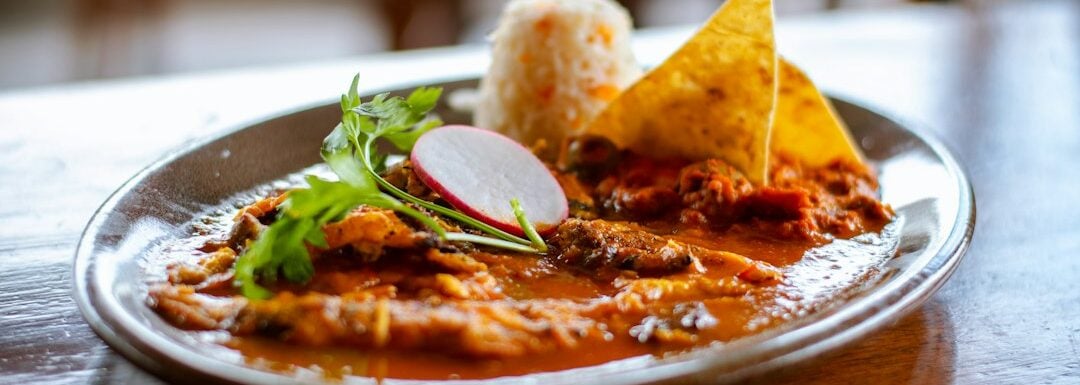
A local Mexican restaurant does not publish a nutrition chart, so most people guess. This guide uses the USDA’s lab analyses of real Mexican restaurant dishes to show roughly where the carbohydrate sits on a typical combination plate, and how the total changes as rice, beans, and extra items are added. It is a guide to proportions, not a menu for any one restaurant.
Quick answer: On a combination plate, the rice and beans often carry as much carbohydrate as the entree. In the USDA data, a serving of cheese enchiladas works out to about 38 g, a cup of refried beans about 25 g (with 12 g of fiber), and Spanish rice about 31 g per 100 g. Put together, that plate is about 94 g before chips, tortillas, or a drink. This is general education, not medical advice. Ask your care team what carbohydrate range fits you.
About the numbers in this guide
The figures come from the USDA’s Standard Reference “Restaurant, Mexican” entries, which were built by sampling dishes from restaurants and analyzing them. They are averages, and your restaurant’s recipes and portions will differ. Most of the entries are published per 100 g (about 3.5 ounces), so that is how the first table shows them. The USDA entries do not cover tortillas, fajitas, chips, burritos, or margaritas. For tortillas, fajitas, and side portions we add figures from one national chain, Chili’s, as a reference point. Chips, burritos, and drinks are still not counted anywhere below.
Common dishes, per 100 g
| Dish (per 100 g) | Calories | Carbs (g) | Fat (g) | Protein (g) |
|---|---|---|---|---|
| Cheese enchilada | 273 | 15.5 | 18.5 | 11.2 |
| Pork tamale | 174 | 15.8 | 9.0 | 7.4 |
| Refried beans | 156 | 16.8 | 6.8 | 6.9 |
| Soft taco with ground beef, cheese, and lettuce | 219 | 17.9 | 10.8 | 12.6 |
| Cheese tamales | 216 | 18.0 | 12.0 | 9.0 |
| Cheese quesadilla | 368 | 24.1 | 23.1 | 15.9 |
| Spanish rice | 185 | 31.2 | 5.3 | 5.3 |
| Buñuelos (fried sweet bread) | 462 | 48.6 | 26.2 | 8.0 |
Source: USDA Standard Reference, Restaurant Foods category, as republished by HappyForks and NutritionValue.org; read November 11, 2026.
Weight for weight, Spanish rice has about twice the carbohydrate of an enchilada, a taco, or refried beans. Rice is the densest starch on the plate, and it is usually the easiest part to leave or halve.
What a serving looks like
| Item | Serving in the USDA data | Calories | Carbs (g) | Fiber (g) |
|---|---|---|---|---|
| Cheese enchiladas | 244 g (the sampled servings ranged from 1 to 3 enchiladas) | 666 | about 38 | about 5 |
| Refried beans | 1 cup, 148 g | 231 | 25 | 12 |
| Spanish rice | 100 g (no standard serving given) | 185 | about 31 | not shown |
The enchilada figure is the per-100 g carbohydrate (15.45 g) multiplied by the 244 g serving. The refried beans stand out for fiber: nearly half of their 25 g is fiber, which is a different kind of carbohydrate load than the same number from rice.
Tortillas, fajitas, and side portions: one chain’s numbers
A local restaurant will differ, but a national chain’s printed nutrition menu gives a sense of scale for the items the USDA entries leave out.
| Item (Chili’s) | Calories | Carbs (g) | Fiber (g) |
|---|---|---|---|
| Corn tortilla (each) | about 50 to 60 | about 11 to 13 | about 1 |
| Flour tortilla (each) | about 90 | about 13 to 15 | about 1 |
| Side of black beans | 120 | 20 | 6 |
| Grilled chicken fajita skillet, no tortillas or sides | 510 | 23 | not shown |
| Side of Mexican rice | 160 | 27 | 1 |
Source: Chili’s Nutrition Menu copies and the FatSecret database, read November 11, 2026; see our Chili’s guide for detail.
Fajitas are useful because the starch arrives separately. The skillet of meat, peppers, and onions is about 23 g, and each tortilla you fill adds roughly 13 to 15 g, so you decide the total one tortilla at a time.
A worked example: how the plate adds up
These are examples, not recommendations. Chips and drinks are not included because we have no reliable figures for them, and tortillas are counted only in plate E.
| Plate | Pieces | Carbs (g) | How it adds up |
|---|---|---|---|
| A: enchiladas only | Cheese enchilada serving (244 g) | 38 | 38 |
| B: enchiladas and beans | Enchilada serving, 1 cup refried beans | 63 | 38 + 25 |
| C: the combination plate | Enchilada serving, 1 cup refried beans, 100 g Spanish rice | 94 | 38 + 25 + 31 |
| D: combination plate with a large rice portion | Plate C with 200 g of rice | 125 | 38 + 25 + 62 |
| E: fajitas with beans (chain figures) | Chicken fajita skillet, 2 flour tortillas, side of black beans | about 69 | 23 + 26 + 20 |
On plate C, the sides (56 g) outweigh the entree (38 g). Chips before the meal and a sweet drink would go on top of every one of these totals. For chain restaurants with published numbers, see our Chipotle, Taco Bell, and Chili’s guides. This is a counting exercise, not a prediction of how your glucose will respond. To see that, use a meter or CGM; our post-meal glucose tracker and CGM guide show how.
Ordering ideas to discuss
- Choose rice or beans, not both, or ask for a half portion of rice. Beans bring fiber and protein with their carbs.
- Decide on the chips before the basket lands. Count out a portion onto a plate instead of eating from the basket.
- Order a la carte. One or two tacos or enchiladas with a side salad is often closer to what you want than a numbered combination.
- Look for grilled plates. Fajita meat and vegetables, grilled fish, and carne asada let you control the tortillas yourself.
- Drink water or unsweetened tea. Margaritas, horchata, and aguas frescas are usually sweetened; see our alcohol and blood sugar guide.
- Move after eating. See our guide to walking after meals.
Frequently asked questions
What can a person with diabetes eat at a Mexican restaurant?
There is no single right order. Grilled meat or fish with vegetables, a taco or two, or an entree with beans and little or no rice all keep the starch lower than a full combination plate. In USDA data, enchiladas with a cup of refried beans and 100 g of Spanish rice come to about 94 g of carbohydrate. Ask your care team what range fits you.
Are refried beans or rice better for blood sugar?
They are different. In USDA data, a cup of restaurant refried beans has about 25 g of carbohydrate, of which about 12 g is fiber. Spanish rice has about 31 g per 100 g with far less fiber. How you respond is individual, so testing after the meal is the way to find out.
How many carbs are in cheese enchiladas?
The USDA’s restaurant cheese enchilada entry has about 15.5 g of carbohydrate per 100 g. Its sampled serving of 244 g works out to about 38 g and 666 calories. Portions vary a lot between restaurants.
About the author: Charles Kirkland is the founder of Metabolic Clarity Labs and author of The Journey Back. He is not a physician. This is general education, not a medically reviewed treatment plan.
Sources checked November 11, 2026. Discuss personal decisions with a qualified clinician. Do not start, stop, or change prescribed treatment based on this article.