
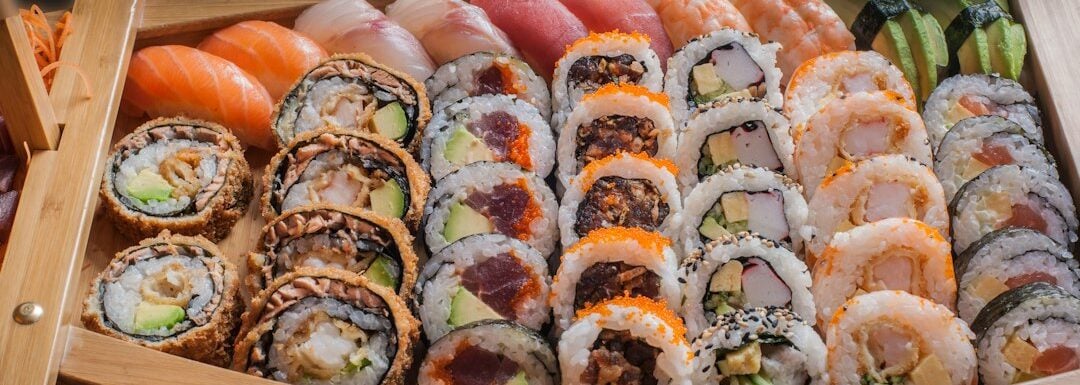
Sushi looks light, and the fish is. The carbohydrate is in the rice, which is seasoned with sugar and vinegar and packed tighter than it appears. A plate of sashimi has almost none, and two specialty rolls can carry as much as a pasta dinner. This guide shows roughly how much each style of sushi contributes and totals four example orders.
Quick answer: Sashimi (fish without rice) has essentially no carbohydrate. One piece of nigiri lists about 8 to 11 g. A whole roll lists anywhere from 26 g to 82 g depending on the type, and the sources we read disagree with each other because roll sizes are not standard. In our examples, sashimi with two pieces of nigiri came to about 18 g, and two specialty rolls came to about 148 g. This is general education, not medical advice. Ask your care team what carbohydrate range fits you.
About the numbers in this guide
Sushi restaurants rarely publish nutrition information, so these figures come from the FatSecret food database’s generic sushi listings, which show calories, fat, carbohydrate, and protein. They are averages. A roll may be cut into six, eight, or ten pieces and made with more or less rice, and other sources we read give quite different numbers for the same roll: a California roll appears at about 33 g in one table and 66 g in another. Use the figures to compare styles, and do not treat any single number as exact.
Sashimi and nigiri
| Item | Serving | Calories | Carbs (g) | Protein (g) |
|---|---|---|---|---|
| Tuna sashimi | 1 serving | 31 | 0 | 6.6 |
| Salmon sashimi | 1 serving | 41 | 0 | 6.1 |
| Tilapia nigiri | 1 piece | 49 | 8 | 2 |
| Salmon nigiri | 1 piece | 48 | 9 | 1.9 |
| Tuna nigiri | 1 piece | 46 | 9 | 1.9 |
| Smoked salmon nigiri | 1 piece | 68 | 9 | 5 |
| Sea eel nigiri | 1 piece | 90 | 11 | 4 |
Source: FatSecret food database, generic sushi listings, read November 11, 2026. The sashimi rows show no carbohydrate value on the page, which we have entered as 0; the page does not name the sashimi serving size.
Eel nigiri is higher than the others because eel is brushed with a sweet sauce. Other sources we read put a piece of tuna or salmon nigiri at 6 to 8 g, so a fair working range is 6 to 11 g per piece.
Rolls
| Roll (whole roll) | Calories | Carbs (g) | Fat (g) | Protein (g) |
|---|---|---|---|---|
| Spicy tuna roll | 290 | 26 | 11 | 24 |
| Spicy shrimp roll | 397 | 57 | 11 | 19 |
| Spicy salmon roll | 485 | 59 | 16 | 25 |
| Tofu roll | 321 | 62 | 3 | 11 |
| California roll | 361 | 66 | 6 | 10 |
| Rainbow roll | 489 | 66 | 9 | 31 |
| Dragon roll | 507 | 66 | 18 | 18 |
| Tempura roll | 531 | 82 | 11 | 25 |
The spicy tuna roll at 26 g is far below the other rolls in this list, and other sources we read put a spicy tuna roll at 53 to 67 g. We would not count on the low figure. A safer assumption is that a full-size roll is in the neighborhood of 55 to 70 g, with tempura and sauce-covered rolls higher. Small traditional maki (a thin tuna, salmon, or cucumber roll) is listed at about 5 g per piece.
A worked example: four orders compared
These are examples, not recommendations. Each is added up from the tables above.
| Order | Pieces | Carbs (g) | How it adds up |
|---|---|---|---|
| A: mostly sashimi | A sashimi plate, 2 pieces of tuna nigiri | 18 | 0 + 9 + 9 |
| B: nigiri dinner | 6 pieces of salmon nigiri | 54 | 6 x 9 |
| C: one roll and nigiri | California roll, 2 pieces of salmon nigiri | 84 | 66 + 18 |
| D: two specialty rolls | Tempura roll, dragon roll | 148 | 82 + 66 |
Soup, salad, edamame, sauces, and drinks are not counted because the listings did not include them. This is a counting exercise, not a prediction of how your glucose will respond. To see that, use a meter or CGM; our post-meal glucose tracker and CGM guide show how.
Ordering ideas to discuss
- Build the meal around sashimi and add rice on purpose, as a few pieces of nigiri or one roll.
- Count rolls, not pieces. Two rolls is commonly more than 100 g.
- Watch the words tempura, crunchy, and sweet sauce. Batter, eel sauce, and sweet chili sauce add carbohydrate on top of the rice.
- Ask about less rice or a cucumber wrap. Many restaurants will make a roll with light rice or wrapped in cucumber.
- Go easy on soy sauce if you watch your blood pressure. It is very high in sodium; see our average blood pressure guide.
- Move after eating. See our guide to walking after meals.
Frequently asked questions
Can a person with diabetes eat sushi?
Yes, and the amount of rice is the main thing to plan. Sashimi has essentially no carbohydrate, a piece of nigiri about 6 to 11 g, and a full roll commonly 55 to 70 g or more. Ask your care team what range fits you.
How many carbs are in a California roll?
Sources disagree because roll sizes vary. The database we used lists a whole California roll at 66 g of carbohydrate, while another table we read lists about 33 g. Treat it as roughly 30 to 70 g depending on the size and the amount of rice.
Is sashimi better than a roll for blood sugar?
Sashimi is fish without rice, so it has essentially no carbohydrate, while rolls and nigiri include sweetened rice. How you respond is individual, so testing after the meal is the way to find out.
About the author: Charles Kirkland is the founder of Metabolic Clarity Labs and author of The Journey Back. He is not a physician. This is general education, not a medically reviewed treatment plan.
Sources checked November 11, 2026. Discuss personal decisions with a qualified clinician. Do not start, stop, or change prescribed treatment based on this article.